

🥖 Practice before you bake
We make sourdough simple
Two little practice tools from our kitchen. Wake up a starter, then find the scoring angle that gives your loaf its ear.
01 · Your starter
Wake up the jar
Feed it, pick your kitchen temperature, then move the clock forward and watch it rise.
A sleepy starter. Give it a feed to wake it up.
A little demo, not a baking timer. A real starter depends on your flour, water, and warmth.
02 · Your loaf
Score & bake
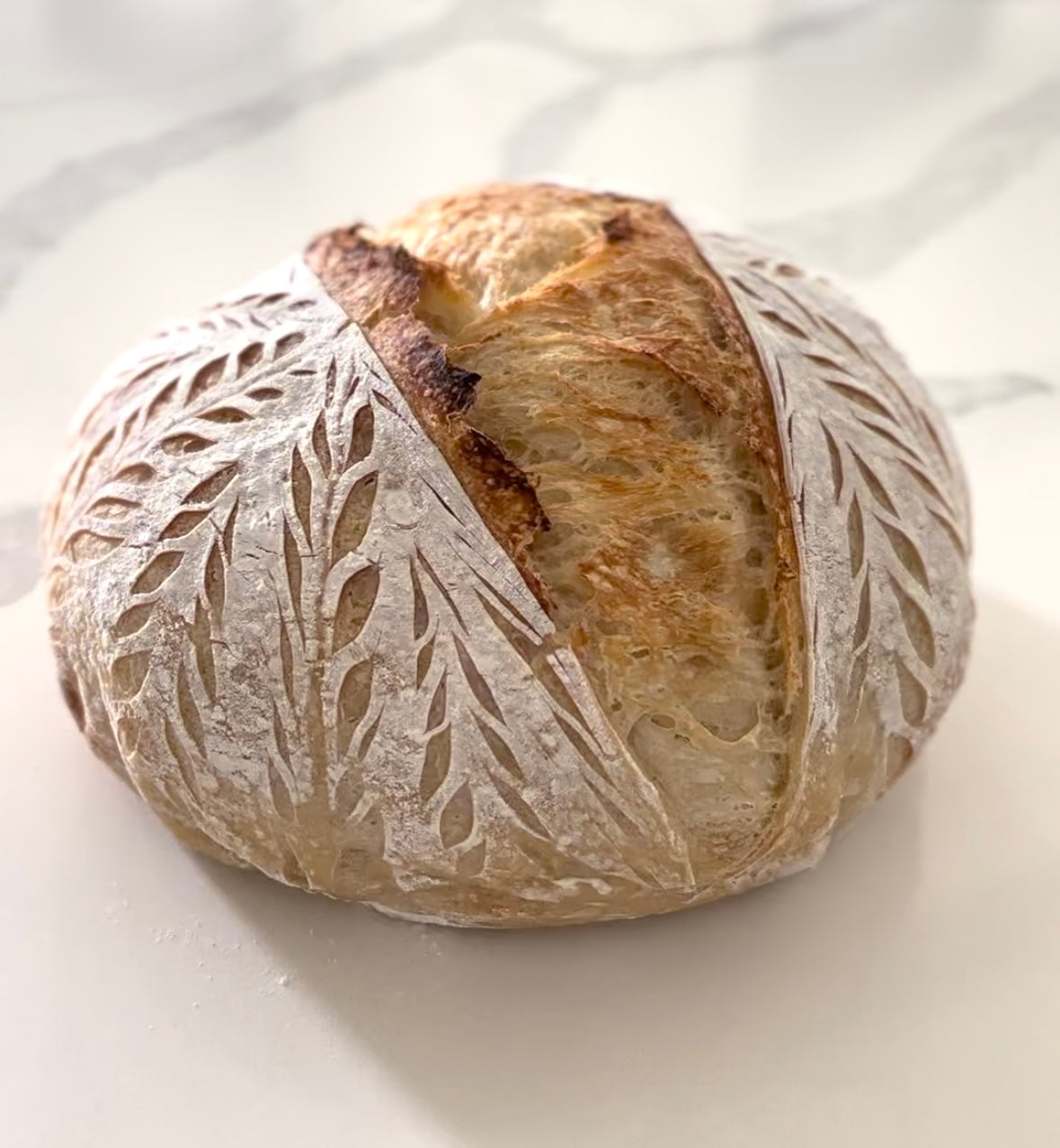
Pick your blade angle and watch the lame score the loaf. Then bake it and see what happens in the oven.
Scored low at 30–45°. Click below to bake it, or pick another angle first.
Tip: score cold dough straight from the fridge, at least ½ inch deep, in one confident motion.




Recipes & Guides
-
Sourdough Pricing Guide & Flavor List
Regular price $5.00 USDRegular price -
Micro Bakery Guide
Regular price $10.00 USDRegular price -
All You Knead Is Loave E-Book
Regular price $15.00 USDRegular price


Sourdough Tools & Accessories for Every Baker
-
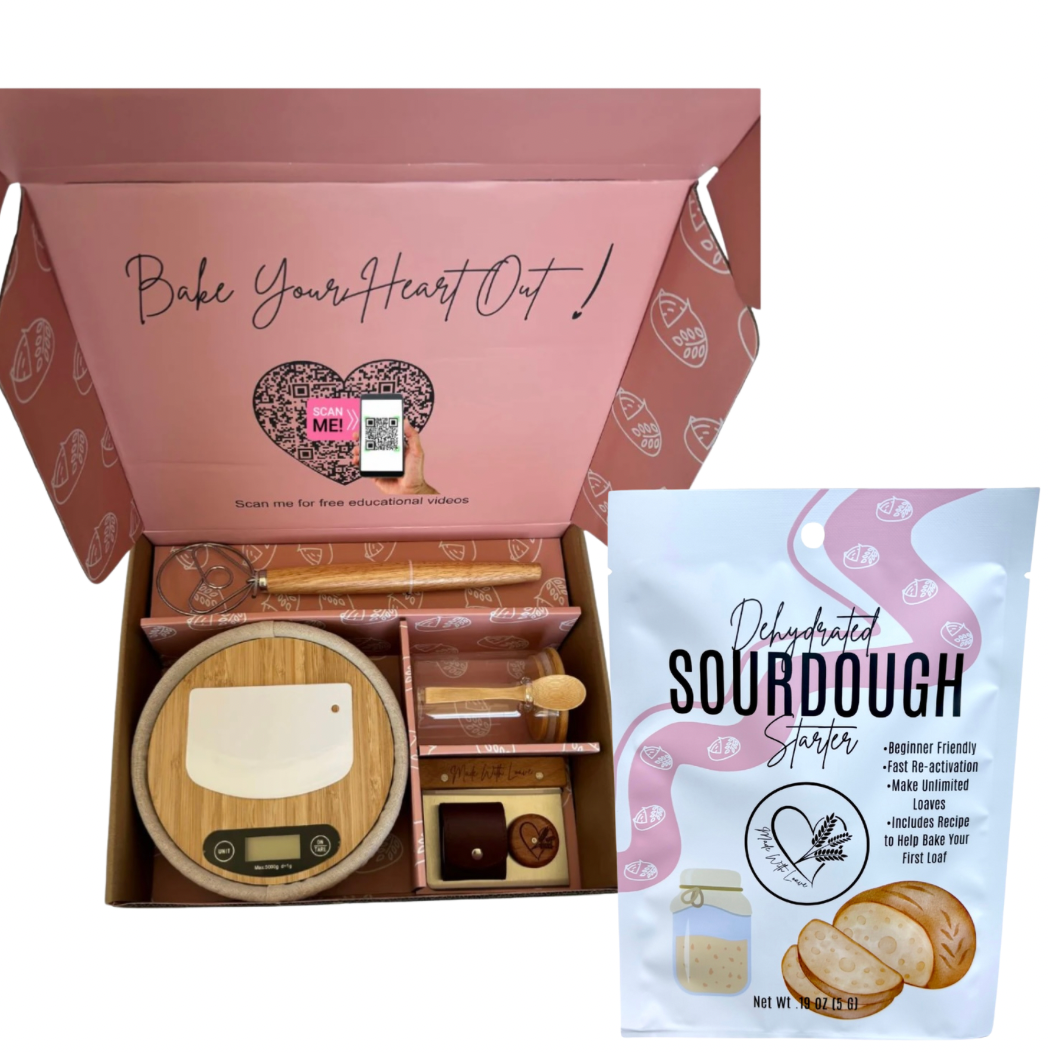
Sourdough Kit + Starter With Recipe & Educational Tutorials
Regular price $65.00 USDRegular price -
Sourdough Blanket
Regular price $45.00 USDRegular price -
Sourdough Accessory Kit
Regular price $40.00 USDRegular price -
Sourdough Starter + Bread Sling
Regular price $25.00 USDRegular price -
Silicone Bread Sling-Batard
Regular price $20.00 USDRegular price -
Bamboo Digital Food Scale
Regular price $20.00 USDRegular price -
Silicone Bread Sling-Boule
Regular price $20.00 USDRegular price -
Gold Scissors & Twine
Regular price $15.00 USDRegular price -
Dehydrated Sourdough Starter + Recipe + Free Shipping
Regular price $15.00 USDRegular price -
In My Sourdough Era Bracelet Stack
Regular price $15.00 USDRegular price -
Sourdough Gift Tags
Regular price $10.00 USDRegular price -
Made With Loave Sourdough Stencil
Regular price $10.00 USDRegular price


Let customers speak for us
Great!! Everything is fantastic. Perfect box set to start with.

Small but mighty

I love my starter kit. I’m just in the process of my first week of feeding and waiting for it now to rise double. Seems to be a little bit slow, but it’s been a little cooler in the northeast here.
Looking forward to working with all of my tools which were perfectly packaged! A tremendous presentation for made with loaves.
So exciting for my new adventure. Great videos to help me learn.
I received this and was immediately bemused at how beautifully this all was package and presented!! (Now I'm thinking Christmas gifts!( I feel like I have absolutely everything I need to start my sourdough journey, and at a very decent price - I started pricing out the tools individually, and realized quickly this was a bargain. Unfortunately, our temperature spiked over 100° today, so I've not yet started, but I am so excited to use this complete kit !!
Love it - can wait to use it!

I love it 🩷 this company is so nice and honest as well- Ups lost my package and they immediately sent me out another!! THANK YOU 🩷🩷🩷
Easy to use. Beautifully crafted materials.
Doesn't stick to my loaf when my bread rises. Good quality.

Made starting my sourdough journey beyond easy.

Obsessed with the entire package! So beautiful

Sooooo good, I gift it to all my favorite humans!

Excellent product and instructions
Appreciative of the guidance and details that let me
Bake the most beautiful and delicious bread!
The bowl covers are beautiful! The fabric is lovely and the sizes are perfect.
They work well to cover your bowl when your dough is resting.
I love everything it is so cute and fun!
