

How to Maintain a Sourdough Starter: The Complete Guide
How to Maintain a Sourdough Starter: The Complete Guide
A healthy sourdough starter needs three things: regular feedings, a comfortable temperature, and a little attention. Get those right and your starter can keep making great bread for years, and some bakers keep the same one going for decades.
If you're new to sourdough, "maintaining" a starter can sound like caring for a pet. It's closer to keeping a houseplant: it's forgiving, and most problems are easy to fix.
This guide covers what a healthy starter looks like, how and when to feed it, how to store it, and what to do when something goes wrong. You'll also learn how to bring a neglected starter back to life and how to make a backup so you never lose it.
💡 The short version: Feed a counter starter once or twice a day and a fridge starter about once a week. Weigh your flour and water, keep the jar around 75 to 78°F, and bake when it has doubled, has a domed top, and is full of bubbles.
What Does a Healthy Sourdough Starter Look Like?
A healthy starter is active, bubbly, and pleasant-smelling. Before you adjust anything, check for these signs:
- It rises predictably. A well-fed starter typically doubles in volume within 4 to 8 hours at a warm room temperature (around 75°F).
- It's bubbly throughout. You should see bubbles on the surface and through the body of the starter, not only at the top.
- It has a domed top. At its peak, the surface is rounded and slightly convex. When it starts to flatten or dip, it has passed its peak and is getting hungry.
- It smells good. Expect a mildly tangy, yeasty aroma that can remind you of yogurt, beer, or ripe fruit.
- It has the texture of thick pancake batter. It should be stretchy and pourable, not stiff like dough or runny like milk.
Mark your starter's level with a rubber band right after feeding (the dashed line). At peak it has roughly doubled and the top is domed. Once the dome sinks, it's hungry again.
You may have heard of the "float test," where a spoonful of starter floats in water when it's ready. It can be a helpful hint, but it isn't foolproof. Watching the rise and the bubbles is more reliable.
How Often and How Much Should You Feed a Sourdough Starter?
Feeding means refreshing your starter with fresh flour and water so the wild yeast and bacteria have food to eat. The amount you feed, and how often, depends on how you store it and how soon you want to bake.
Feed by weight, not volume
A kitchen scale makes feeding consistent. Cups and spoons vary too much, especially with flour. Starters are described by ratio, written as starter : flour : water. A 1:1:1 feeding means equal weights of each, such as 20 g of starter, 20 g of flour, and 20 g of water.

Feed by weight
Weigh to the gram, every time
Our bamboo digital food scale has a tare function, so you can zero out the jar and measure starter, flour and water in one go.
Get the Scale, $20 →Pick a ratio that fits your schedule
The more fresh flour and water you add compared with starter, the longer it takes to peak. These times are approximate and assume a room around 75°F.
| Feeding ratio (starter : flour : water) | Approximate time to peak | Good for |
|---|---|---|
| 1:1:1 | 4 to 6 hours | Fast turnaround before baking |
| 1:2:2 | 6 to 8 hours | Everyday twice-a-day or daily feeding |
| 1:5:5 | 8 to 12 hours | Overnight feeding |
| 1:10:10 | 12 to 16 hours | Once-a-day feeding in a warm kitchen |
Choose your flour and water
- Flour: Unbleached all-purpose or bread flour works well. Swapping in 10 to 25 percent whole wheat or rye gives the yeast extra nutrients and often livens up a sluggish starter.
- Water: Room-temperature filtered water is a safe choice. If your tap water smells strongly of chlorine, let it sit out for a few hours or use filtered water.
Why you discard
Before each feeding, you remove most of the starter. Without discarding, the jar would overflow and you would need a huge amount of flour to keep the ratio balanced. A small amount of starter is also easier to keep active. You don't have to throw the discard away, because it works well in pancakes, crackers, and waffles.
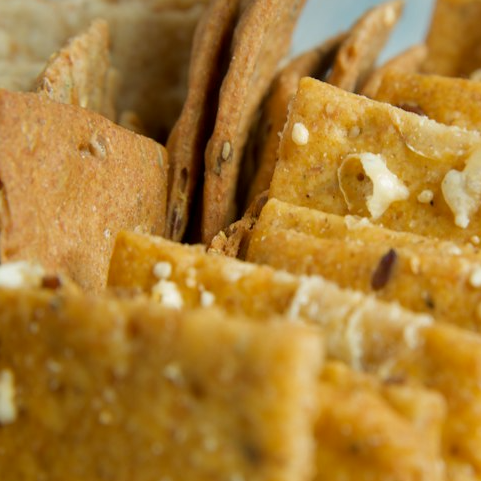
🎁 Free download
Got extra discard? Don't throw it out!
Our free Sourdough Discard Crackers guide turns it into a crispy, golden snack with just 2 ingredients. Includes 6 flavor ideas and a batch chart. 🫶🏻
Get the Free Cracker Guide →Should You Store Your Starter on the Counter or in the Fridge?
Both work. The right choice depends on how often you bake. Cold slows fermentation dramatically, so a refrigerated starter needs far less attention than one kept on the counter.
| Counter (room temperature) | Refrigerator | |
|---|---|---|
| Feeding frequency | Once or twice a day | About once a week |
| Best for | Baking several times a week | Baking weekly or less |
| Activity | Strong and predictable | Slow and dormant |
| Before baking | Use at peak | Feed and warm up for 1 to 2 feedings first |
How to store a starter in the fridge
- Feed the starter as usual and leave it on the counter for 1 to 2 hours so it starts to rise.
- Cover the jar loosely with a lid or cloth, then place it in the fridge.
- Once a week, take it out, discard most of it, and feed it. Let it sit out for an hour or two before returning it to the fridge.
A starter that has been refrigerated will usually be sluggish at first. Give it one or two feedings on the counter, about 12 hours apart, until it doubles reliably again before you bake with it.
Step-by-Step: How to Feed Your Sourdough Starter
Here is a simple routine for a starter kept on the counter. It uses a 1:2:2 ratio, which keeps most starters happy on a once- or twice-daily schedule.
- Set up your jar. Place a clean jar on your scale and zero it out. A glass jar makes it easy to see bubbles and track the rise.
- Discard. Stir your starter, then keep about 20 g and remove the rest.
- Add flour. Add 40 g of flour to the jar.
- Add water. Add 40 g of room-temperature water.
- Mix well. Stir until no dry flour remains, then scrape down the sides of the jar.
- Mark the level. Put a rubber band or piece of tape at the top of the starter so you can see how much it rises.
- Cover loosely. Rest the lid on top without twisting it shut, or use a cloth. Fermentation produces gas, and a sealed jar can build pressure.
- Let it rise. Keep it somewhere warm, ideally 75 to 78°F, until it doubles and peaks.
Once it peaks, either use it for baking or feed it again to keep it going. If you notice the dome flattening or the starter sinking, it has passed its peak, so it's time to feed.
Sourdough Starter Troubleshooting: Common Problems and Fixes
Most starter problems come down to hunger, temperature, or time. Here are the issues bakers run into most often.
| What you see | Likely cause | What to do |
|---|---|---|
| Gray or dark liquid on top ("hooch") | The starter is hungry | Stir it in or pour it off, then feed. Feed more often or use a higher ratio. |
| Slow rise or few bubbles | A cool kitchen or a starter that is too young or sluggish | Move it somewhere warmer, add a little whole wheat or rye, and feed on a regular schedule for a few days. |
| Very sour or vinegary smell | Long gaps between feedings | Feed more frequently or use a larger ratio, such as 1:5:5. |
| Nail polish remover (acetone) smell | The starter is very hungry | Discard most of it and feed. The smell usually fades after a feeding or two. |
| Dry crust on top | Poor cover or low humidity | Remove the dry layer, then stir and feed. Use a looser, more humid cover. |
| Pink or orange streaks, or fuzzy mold | Contamination | Throw the whole starter away and begin again with a clean jar. |
Hooch looks alarming, but it is harmless. It is alcohol produced by yeast with nothing left to eat, and it simply tells you the starter wants a meal.
⚠️ Mold and pink or orange discoloration are different. If you see either, do not try to save the starter. Discard it, wash the jar thoroughly, and start fresh.
How to Revive a Neglected or Dormant Sourdough Starter
Forgot to feed your starter for a few weeks? Don't panic. Sourdough starters are surprisingly resilient, and a starter that has been sitting in the fridge can almost always be revived.
- Inspect it. Look for mold or pink and orange streaks. If you see any, discard the starter. A gray liquid layer or a dark, sour-smelling surface is normal.
- Pour off the hooch. Remove any liquid on top, and scrape off any dry or discolored crust.
- Take a clean scoop. Spoon a small amount from the center of the jar, where the starter is freshest, into a clean jar. Discard the rest.
- Feed it. Add equal weights of flour and water to that scoop, for example 20 g of starter with 20 g of flour and 20 g of water.
- Keep it warm. Set it somewhere around 75 to 78°F.
- Repeat every 12 hours. Discard and feed on a steady schedule.
Expect little activity at first. Most dormant starters wake up within 2 to 5 days, though a very neglected one can take a bit longer. You'll know it's back when it doubles reliably within 4 to 8 hours of feeding.
Be patient and keep feeding on schedule. If there is still no activity after a week or more of consistent feeding, adding a spoonful of whole wheat or rye flour can give it a boost.

Starter beyond saving?
Start fresh with a proven starter
Our dehydrated starter comes with a recipe and ships free. Rehydrate it and skip the guesswork of building a starter from scratch.
Get the Starter, $15 →How to Dry and Back Up Your Sourdough Starter
Every baker should keep a backup. Spills, travel, and forgotten jars happen, and a dried starter is cheap insurance that can last a year or longer when stored well.
Drying your starter
- Feed your starter and wait until it is active and bubbly.
- Spread a thin layer onto a sheet of parchment paper.
- Let it dry at room temperature, away from direct sunlight, until it's brittle. This usually takes a day or two.
- Crumble the dried starter into flakes.
- Store the flakes in an airtight container or bag in a cool, dry place.
Bringing it back
To rehydrate, mix a tablespoon or so of flakes with an equal amount of warm water and let them soften for about an hour. Stir in an equal weight of flour, then feed on your regular schedule until the starter is bubbly and doubling again. Expect this to take a few days.
A dried starter also makes a thoughtful gift. Share some with a friend, and you'll both have a backup if either of you loses your jar.
Sourdough Starter Maintenance FAQ
How often should I feed my sourdough starter?
If you keep it on the counter, feed it once or twice a day. If you keep it in the fridge, feed it about once a week.
Do I have to discard part of my starter every time?
Yes, in most cases. Discarding keeps the amount of starter manageable and makes sure the fresh flour and water are enough to feed it properly. Use the discard in recipes so nothing goes to waste.
Can I use tap water to feed my starter?
Often you can. If your tap water has a strong chlorine smell, let it sit out for a few hours or use filtered water instead, since chlorine can slow the yeast.
What kind of flour is best for a sourdough starter?
Unbleached all-purpose or bread flour works well. Adding a little whole wheat or rye gives the starter extra nutrients and can make it more active.
How do I know when my starter is ready to bake with?
Look for a starter that has doubled in size, has a domed top, and is full of bubbles. This usually happens 4 to 8 hours after feeding at a warm room temperature.
Can I leave my starter alone while I'm on vacation?
Yes. Feed it, let it get bubbly for an hour or two, and put it in the fridge. Most starters survive several weeks this way, and many survive longer. When you return, give it a couple of feedings before you bake.
Is the gray liquid on my starter mold?
No. Gray or dark liquid is hooch, a sign your starter is hungry. Stir it in or pour it off, then feed. Fuzzy growth or pink and orange streaks are signs of contamination, and the starter should be thrown out.
Keep Your Starter Happy and Keep Baking
Maintaining a sourdough starter comes down to a few habits: feed it on a schedule that fits your baking, keep it somewhere that suits your routine, and learn to read the signs it gives you. Once those habits click, a starter takes only a few minutes of attention a day, or a few minutes a week if you keep it in the fridge.
The more you bake, the better you'll understand your own starter's rhythms. And if something goes wrong, remember that most problems can be fixed with a good feeding and a little patience.
Ready to put your starter to work? Start with The Complete Beginner's Guide to Sourdough. We make sourdough simple.

Bulk fermentation still confusing?
All You Knead Is Loave: The Beginner's Guide to Sourdough
Our 21-page ebook walks you through every step in detail, with a full temperature chart, a "ready when" checklist, sample bake schedules, a troubleshooting table and a printable bake log.
Get the Ebook, $15 →
Brand new to sourdough
Sourdough Kit + Starter
The core tools, our dehydrated starter, a recipe PDF and video tutorials. $65 · free shipping.
Shop the Kit →
Already have a starter?
Bamboo Digital Food Scale
Feed and bake by weight, to the gram, with a tare function. $20.
Shop the Scale →🎁 Not ready to buy? Start free
Get our free recipe and cracker guide, delivered to your inbox
We'd love to see your bakes! Share them on Instagram and tag @madewithloave.
Happy Baking 🫶🏻🥖
Made With Loave is your one-stop shop for sourdough tools, education and community. Browse our full collection at madewithloave.com.